
Lebanon Accuses Israel of War Crimes After Journalist Killed in Air Strike
Lebanon’s Prime Minister has accused Israel of war crimes following an air strike in southern Lebanon that killed journalist Amal Khalil and injured another reporter. Israel denies targeting journalists, while rights groups and officials call for international investigation into the incident.
WORLD NEWS
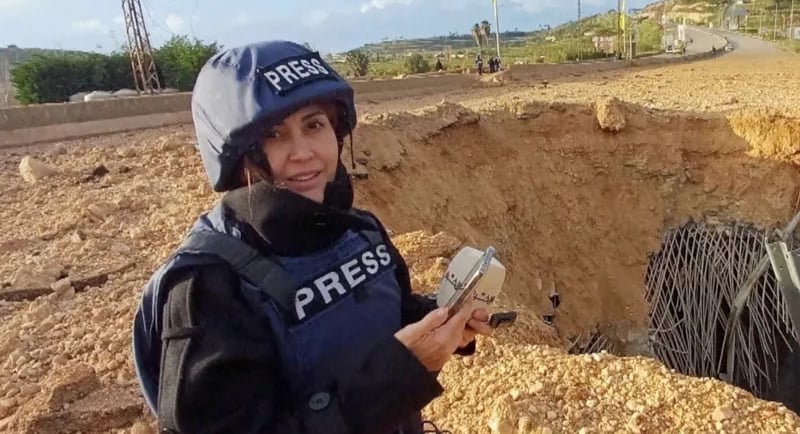
Lebanon’s Prime Minister has strongly accused Israel of committing war crimes following an Israeli air strike in southern Lebanon that killed one journalist and injured another on Wednesday.
The strike killed Amal Khalil, a journalist working with Lebanese newspaper Al-Akhbar, while freelance photographer Zeinab Faraj was injured. Lebanese officials say both journalists were deliberately targeted after seeking shelter in a house following an earlier strike that hit a vehicle nearby, killing two unidentified men.
Claims of Targeted Attack
According to Lebanese authorities, the journalists had moved into a nearby building for safety when the second strike occurred. Officials further alleged that an Israeli strike also targeted a clearly marked Red Cross ambulance attempting to reach the wounded in the village of Tayri.
The Lebanese Ministry of Health described the incident as a “double violation”, accusing Israeli forces of first blocking rescue access and then firing on a location where civilians and journalists were sheltering.
The ministry said the ambulance came under gunfire and stun grenade fire, preventing medical teams from reaching the injured.
Lebanese Government Reaction
Prime Minister Nawaf Salam condemned the incident, saying it reflects a broader pattern of attacks on journalists in southern Lebanon.
“Targeting journalists, obstructing access to them by relief teams, and even targeting their locations again after these teams arrive constitutes described war crimes,” Salam said.
He added that Lebanon would pursue legal action through international legal institutions and expressed condolences to Khalil’s family.
Israel’s Response
The Israel Defense Forces (IDF) denied intentionally targeting journalists or blocking rescue operations.
In its statement, the IDF said it struck two vehicles that had emerged from a structure allegedly used by Hezbollah. It claimed one of the vehicles posed an “immediate threat” after crossing a forward defence line and violating a ceasefire arrangement.
The military said it subsequently struck one of the vehicles and later hit the structure from which the individuals had fled.
The IDF also stated it was aware of reports that journalists were injured but insisted it does not target members of the press and takes steps to minimise civilian harm.
Disputed Circumstances on the Ground
Lebanese officials and emergency services provided a different account, alleging that Israeli forces pursued the journalists after the initial strike and targeted the house where they had taken shelter.
Emergency responders said efforts to evacuate the wounded were obstructed, with rescue teams unable to access the area due to ongoing bombardment.
One of the injured journalists, Zeinab Faraj, along with two of the deceased victims, was eventually evacuated, while Khalil’s body was later recovered by civil defence teams.
International Reaction
Press freedom organisations have expressed alarm over the incident.
The Committee to Protect Journalists (CPJ) said it was “outraged” by Khalil’s death, describing the circumstances as a potential breach of international humanitarian law.
CPJ’s Regional Director, Sara Qudah, said repeated strikes on the same location and alleged obstruction of medical access raise serious legal and ethical concerns under wartime rules protecting civilians and journalists.
Reporters Without Borders also said it had contacted Israeli authorities urging safe access for rescue teams, warning that continued bombardment made evacuation impossible.
Background Tensions
The incident comes amid ongoing hostilities in southern Lebanon, where cross-border tensions involving Israel and Hezbollah have repeatedly escalated. Journalists working in the region have faced increasing risks as military operations intensify.
Lebanon has vowed to escalate diplomatic and legal efforts, while Israel maintains that its operations are directed at militant infrastructure and threats linked to Hezbollah activity.
Gran News delivers to best of the best News articles
Subscribe to our newsletter and never miss a story.
We care about your data in our privacy policy.